

Emotional Wintering: Why the right kind of slowing down is vital.
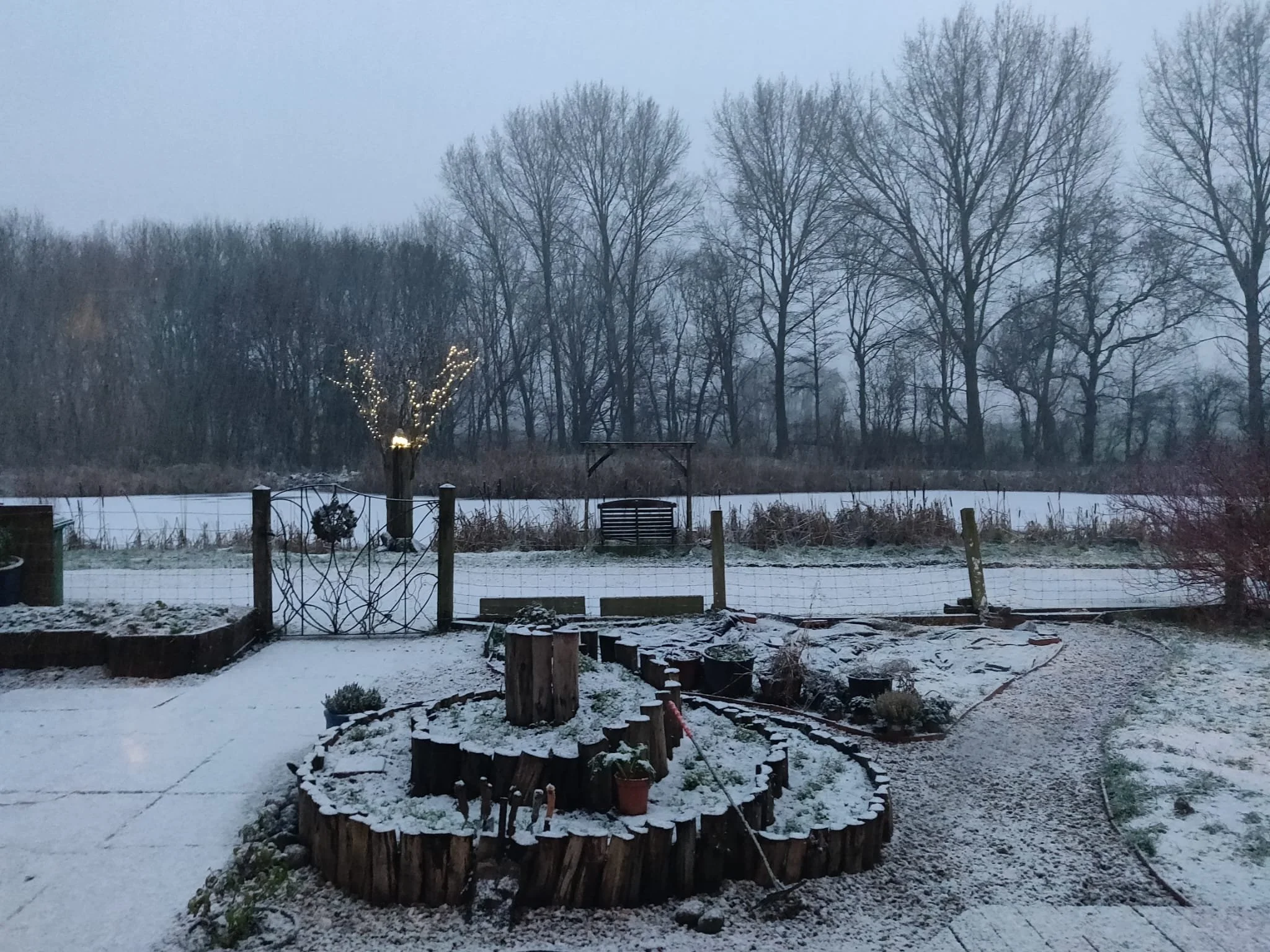
Laila’s Garden in Winter
Above is a photograph of my garden in winter. At first glance, it may look empty. Stripped back. Quiet. Life appears to have retreated underground.
And yet, nothing could be further from the truth.
Winter is not an 'oh dear, nothing is happening' season, it is a vital part of the sustainability.
Plants withdraw energy from visible growth and redirect it into their roots. What looks like dying back is actually deep resourcing, storing nutrients, strengthening foundations, preparing for what comes next.
As human beings, we often forget that we are governed by the same principles.
I sometimes feel like a Seasonal Creature in a Non-Seasonal World
Modern life encourages constant output: perpetual growth, continuous productivity, endless forward motion. Rest is tolerated only if it is efficient. Slowness is often mistaken for weakness.
But emotionally and neurologically, we are not built for permanent summer.
We are physical, emotional, mental, and big-picture beings. Each of these dimensions has its own rhythms and needs. When we ignore them, particularly the emotional and nervous system layers, something eventually gives. Burnout, anxiety, loss of creativity, or emotional numbness.
Emotional wintering is the practice of allowing ourselves to slow down without guilt. It is not collapse. It is conscious withdrawal.
Nervous Systems Need Winter Too
From a nervous system perspective, wintering supports regulation.
When we are constantly pushing, striving, and overstimulated, our systems remain locked in sympathetic activation — fight, flight, urgency, vigilance. Over time, this erodes resilience and narrows perception.
Slowing down allows the parasympathetic system to come back online:
Breathing deepens
Muscles soften
Thought patterns widen
Emotional processing becomes possible
Daydreaming, drifting, staring out of a window, walking without purpose. These are not indulgences. They are regulatory practices. They signal safety to the nervous system and allow unfinished emotional experiences to integrate.
This is where Emotional Intelligence begins: not in control, but in listening.
Emotional Intelligence Is Seasonal
Emotional Intelligence is often framed as skillful interaction with others. But it begins internally, with our relationship to our own states.
Emotionally intelligent people know when to:
Lean in
Step back
Pause
Rest
Reflect
They recognize that clarity does not always come from effort. Often, it emerges from spaciousness.
Wintering gives emotions time to surface without being immediately fixed or reframed. It allows grief to soften, fatigue to speak, and intuition to be heard. In the quiet, we sense what has been overextended and what is ready to be released.
The Intelligence of Daydreaming
When the mind is allowed to wander, something remarkable happens. The default mode network, the brain’s integrative system, becomes active. This is where meaning is made, insights arise, and connections form across time and experience.
Daydreaming is not mental laziness. It is mental integration.
This is particularly important for leaders, creatives, and caregivers, anyone who holds complexity. Without wintering, perspective shrinks. With it, the big picture returns.
Dying Back Is Not Failure
In the garden, winter pruning looks brutal. Stems are cut back. Leaves fall away. Growth halts.
But this dying back is what enables spring.
Emotionally, wintering may look like:
Lower energy
Less certainty
A desire for solitude
Reduced appetite for noise and demands
This is not something to override. It is something to honour.
When we allow ourselves to resource our roots, physically through rest, emotionally through feeling, mentally through reflection, and existentially through meaning-making, we create conditions for sustainable growth.
A Quiet Practice - Use Indigo Brave's Rest and Reset Sessions!
You don’t need to withdraw from life - You just need to diary in moments of non-doing.
A few minutes each day of:
Stillness
Gentle wandering thought
Unstructured time
These small acts tell your system that it is safe to pause.
Like the garden in winter, much may be happening beneath the surface. And when spring comes, as it always does, growth will not need to be forced.
It will rise naturally, from well-resourced roots.
You can find Indigo Brave’s Rest and Reset Session in the Resources Section in our Community Space HERE